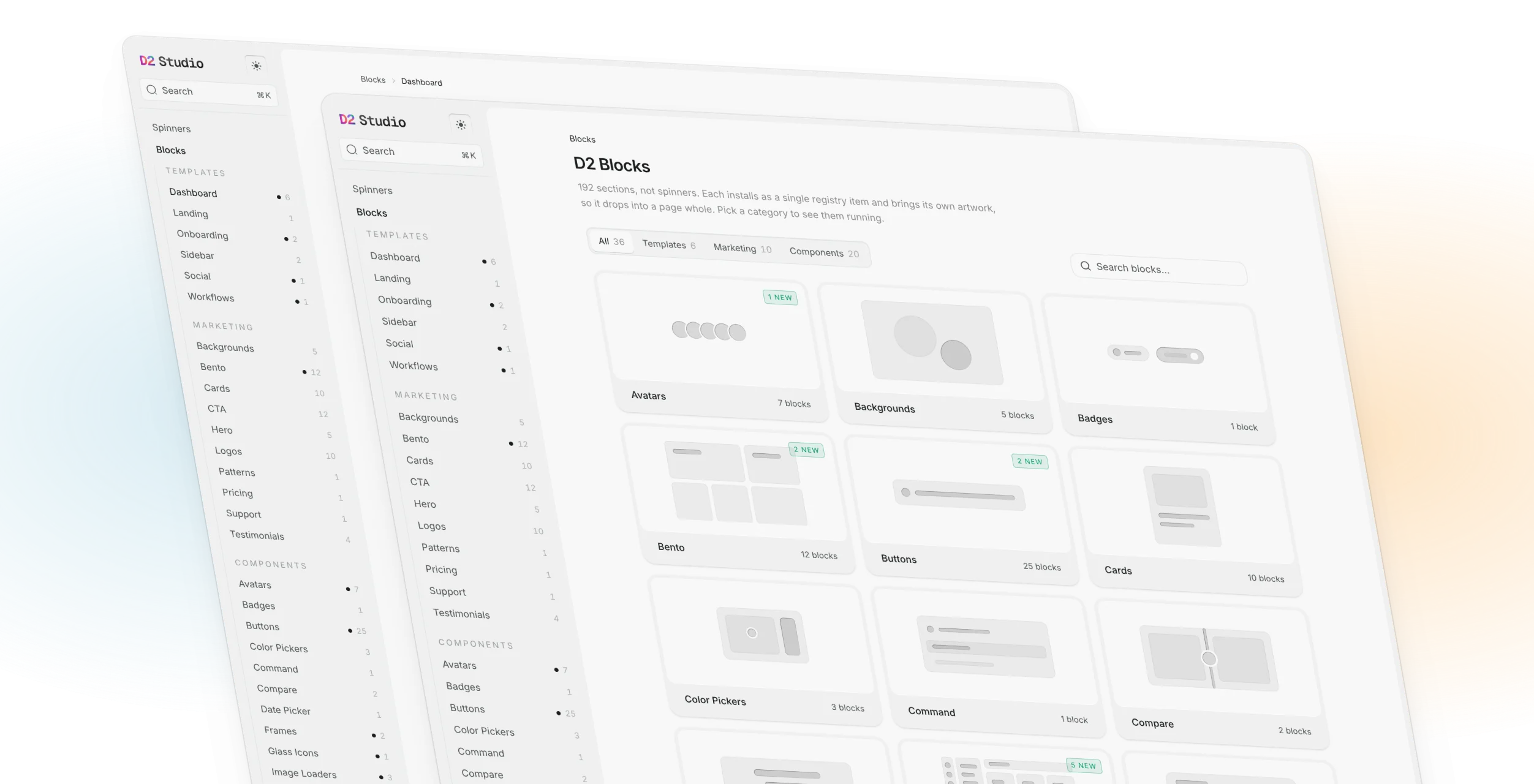
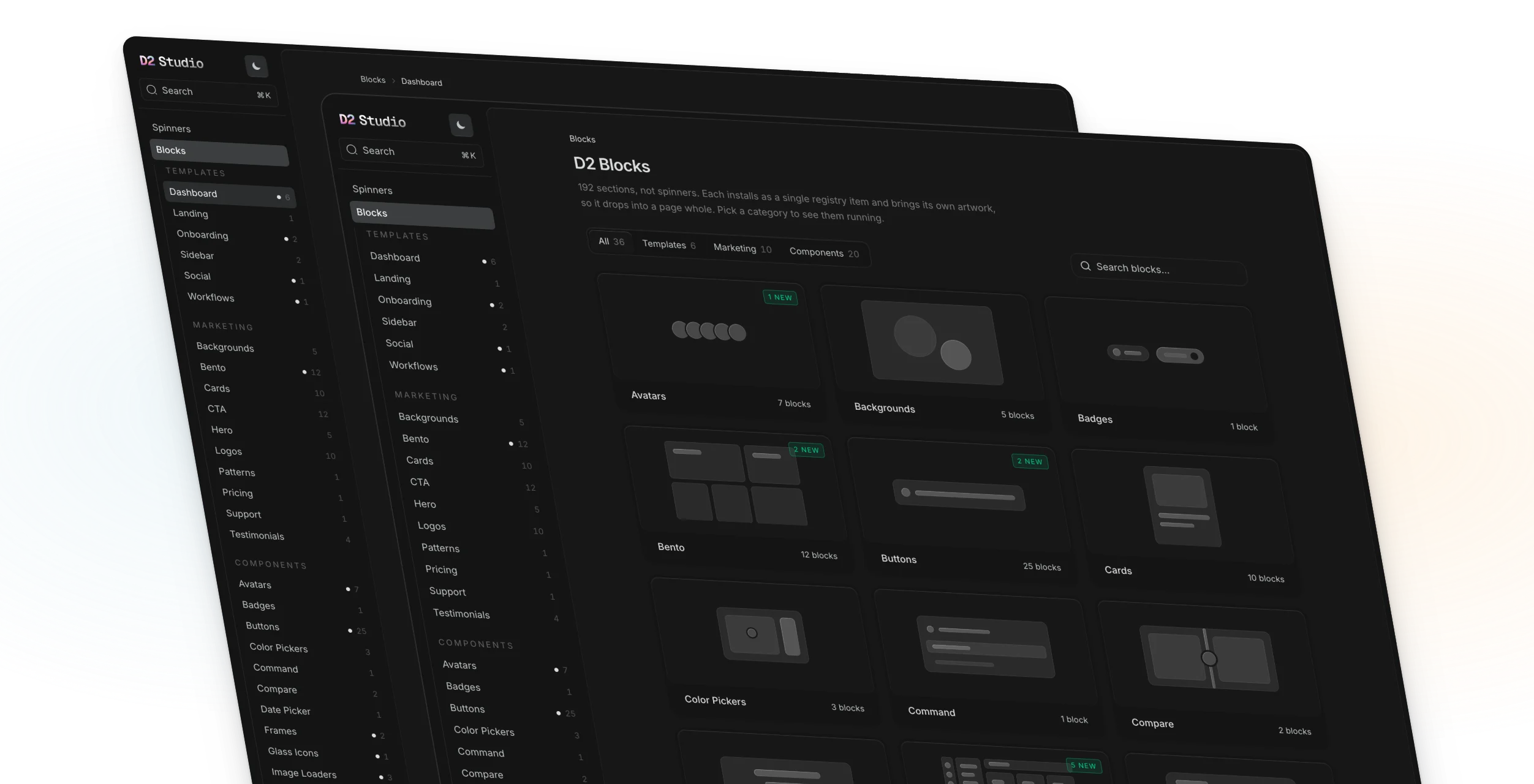
Two D2 Studio Pro screens rising from the bottom edge: the blocks library in front of the dashboard blocks page.

Case study

18 to 345 monthly users in five months, with no marketing spend

I designed, built and launched a UI component library in a crowded market, grew it from 18 to 345 monthly active users, and converted the first paying customers without spending on marketing.

  • Founder and product designer
  • April to September 2026
  • Figma · React · Tailwind CSS · shadcn/ui · Claude Code

The product

D2 Studio has two halves. D2 Studio UI, launched April 2026, is free: copy-and-paste components for React and shadcn/ui. D2 Studio Pro, launched August 2026, is paid: over 200 components, blocks, illustrations and templates, installable by AI agents over MCP. List price $200, launch price $20.

I own design and frontend, in Figma and in code. My co-founder owns the backend.

The market

New UI libraries ship every week, and most are good, so the hard part is getting noticed. The usual answer is to pay for ads, boosted posts and influencer placements, and that traffic leaves when the spending stops.

Starting point

April 2026, launch month of the free library: 18 active users, one minute of engagement per user, no sales.

The constraint

I had no budget, so I had to earn attention, and the only way to keep it was a product worth staying on.

What I did

  1. 01

    Built what people asked for, in public

    The first thing that moved the numbers was one tool inside the library: a spinner builder with 90 patterns, which I made because people kept asking for it in DMs. The launch post on X drew 4,600 views and brought the first real traffic. The page still outperforms whole sections of the site.

    The launch post, 20 April 2026
  2. 02

    Showed the work in short videos

    I recorded short screen videos, each showing one component doing one thing, cut them in CapCut and posted them where designers and developers already are: X, Threads, Instagram, TikTok, dev.to, Contra and community threads. Every spike in the chart lines up with one of these posts. Threads and X together brought 452 first visits.

  3. 03

    Let the ecosystem distribute it

    D2 Studio UI is in the shadcn/ui registry. I did not plan it as a channel, but by September it was the largest one: 125 visitors from ui.shadcn.com in a single month, more than every social network combined. A social post brings a spike that fades, while a listing where the audience already looks keeps sending visitors. That now decides where I put my effort.

    The shadcn/ui registry
  4. 04

    Kept improving the site

    I made pages faster and navigation clearer, added SEO to every component page and built more live demos. The demo pages work as landing pages, because visitors who arrive on a working component stay.

What changed

April 2026September 2026
Active users18345
Engagement time per user1m 03s2m 22s
Paying Pro subscriptions03
Marketing spend$0$0

Google Analytics, 30-day windows. Pro's launch month, August, was the biggest so far at 370 active users. Cloudflare reports 4,250 unique visitors for the last 30 days; developers run ad blockers, so GA undercounts this audience, and I quote the lower figure.

Monthly active users, 2026

18
260
76
65
370
345
AprMayJunJulAugSep

What is still open

Retention is the open problem: thirteen percent of visitors come back. Growth so far is top of funnel, and visitors from social read for 45 seconds where direct visitors read for nearly three minutes. The next job is to make the free library the reason people return, before asking them to pay.

What I took from it

Build the specific thing people ask for before the general thing you planned, and show it running. Then find where your audience already looks and be there. For D2 Studio that was the shadcn/ui registry, which in September brought more visitors than every social network combined.

Next case study

BigBooks, set up alone in Lao

Accounting software a Lao bookkeeper can sign up for, configure and book entries in with no consultant, in Lao or English.

Read the story