The product
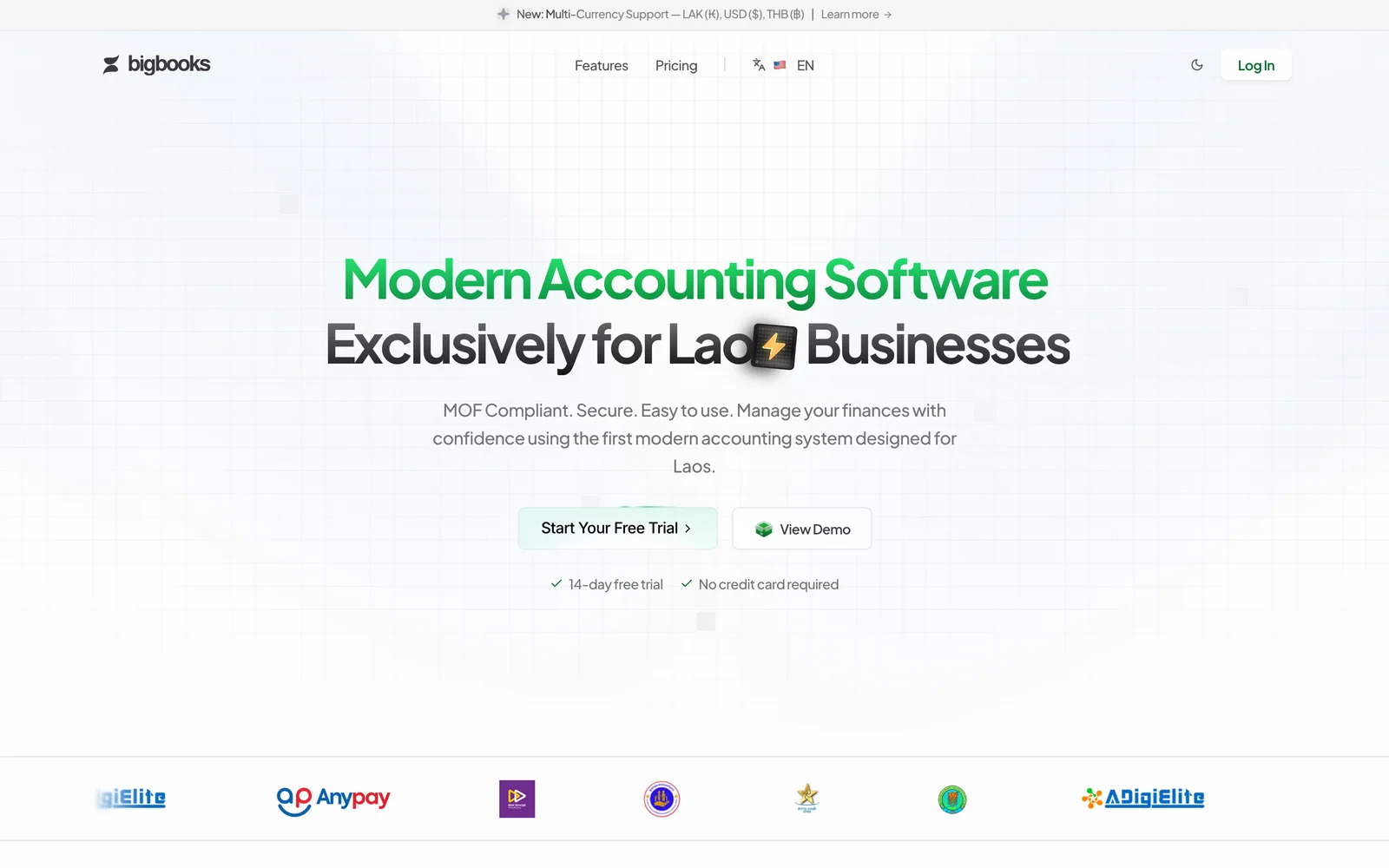
BigBooks is double-entry accounting for Laos: journal vouchers, tax invoices, purchases, inventory, payroll, bank reconciliation, and the financial reports the Ministry of Finance requires. It ships with the official 2020 MoF chart of accounts (454 accounts, each named in Lao and English) and handles Lao Kip, US dollars and Thai baht side by side.
The user
The design persona is Noy, a composite built from the businesses BigBooks serves:
| Who | In-house accountant at a 15-person trading company in Vientiane |
|---|---|
| Language | Thinks and files in Lao. Reads English menus, but not English accounting jargon |
| Tools today | Excel, paper vouchers, a desktop PC in the office |
| Money | Kip amounts with eight or nine digits. Buys in baht, quotes in dollars |
| Pressure | Month-end closing and MoF-format reports, often alone |
| Fear | Picking the wrong account code, or a ledger that doesn't balance |
Three things follow from Noy:
- Language decides whether she trusts the product. Account names, company names and reports all have to exist in Lao, along with the menus.
- Nobody will train her. There is no implementation partner and no onboarding call, so the product has to teach itself one screen at a time.
- She is a power user from day one. Her day is data entry. Speed on the journal screen counts for more than polish anywhere else.
Starting point
A new company used to land on an empty dashboard. All the setup screens existed: settings, fiscal year, chart of accounts, customers, products, opening balances. But nothing put them in order, showed progress, or said what to do next. A new user had to know accounting and know BigBooks before the product was any use.